Introduction
In the landscape of global privacy laws, consent is the bedrock of lawful data processing. However, the reality of digital life is that individuals are bombarded with lengthy, incomprehensible privacy policies and consent pop-ups. "Consent fatigue" is a well-documented phenomenon, leading users to blindly click "I Agree" without understanding what they are signing away.
India's Digital Personal Data Protection (DPDP) Act, 2023, attempts to solve this systemic issue by introducing a revolutionary, tech-driven concept: the Consent Manager. This mechanism is a unique feature of the Indian framework, distinctly setting it apart from laws like the GDPR.
This article demystifies the role of the Consent Manager, exploring how it functions, its benefits for Data Principals, and its implications for businesses.
What is a Consent Manager?
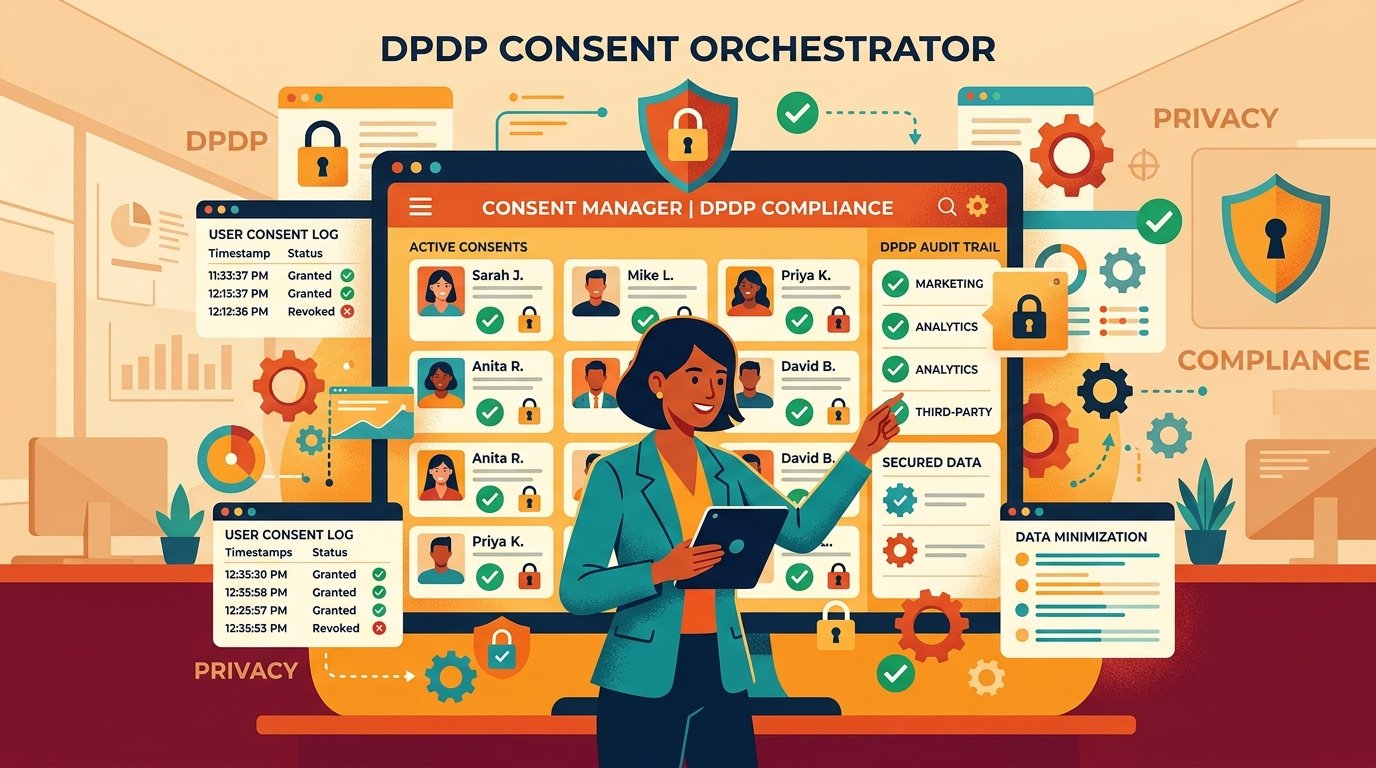
Under the DPDP Act, a Consent Manager is defined as a person registered with the Data Protection Board of India (DPBI) who acts as a single point of contact to enable a Data Principal (the individual) to give, manage, review, and withdraw their consent through an accessible, transparent, and interoperable platform.
Think of it as a digital dashboard or a financial broker, but instead of managing your stocks or bank accounts, they manage your digital privacy choices across the entire internet.
How Does the Consent Manager Framework Operate?
The operational mechanics of Consent Managers rely heavily on India's evolving Digital Public Infrastructure (DPI) and the Data Empowerment and Protection Architecture (DEPA). Here is how the ecosystem functions:
- Registration and Accountability: Consent Managers are not unregulated tech startups. They must be formally registered with the DPBI and are subject to stringent technical, operational, and financial standards to ensure they are trustworthy custodians of consent logs.
- The Interoperable Platform: Individuals can sign up with a Consent Manager of their choice. This platform connects with various Data Fiduciaries (businesses, apps, services) via standardized APIs.
- Centralized Dashboard: When an individual interacts with a new app (a Data Fiduciary) that requires data, the consent request is routed through the user's Consent Manager. The user can view the request (what data, for what purpose, for how long) in plain language on their Consent Manager dashboard and approve or deny it.
- Managing the Lifecycle: Crucially, the Consent Manager allows users to review all their active consents in one place. If a user decides they no longer want a food delivery app to access their location, they can revoke that consent with a single click on their Consent Manager dashboard. The manager then signals the app to stop processing that data.
The Benefits for Data Principals
The Consent Manager framework flips the traditional power dynamic of data collection, placing control firmly back in the hands of the individual.
- Combating Consent Fatigue: By standardizing how consent requests are presented and aggregating them into a single interface, individuals are no longer forced to navigate labyrinthine privacy policies on every new website.
- True Granularity and Transparency: Users can see exactly who has their data and for what purpose, making the abstract concept of "data privacy" tangible and manageable.
- Frictionless Withdrawal: Historically, businesses made it incredibly easy to give consent but notoriously difficult to withdraw it. Consent Managers standardize the withdrawal process, making it as simple as toggling a switch.
Implications for Data Fiduciaries (Businesses)
For businesses operating in India, the introduction of Consent Managers presents both challenges and opportunities.
- Technical Integration: Businesses must build the technical capability to interface with DPBI-registered Consent Managers. When a user requests data erasure or withdraws consent via their manager, the business's backend systems must be able to receive that API call and automatically halt processing and purge the data.
- Shift in User Acquisition Flow: The onboarding flow for apps and services will fundamentally change. Instead of presenting a proprietary terms-of-service checkbox, apps may need to redirect users to their Consent Manager for authorization, similar to how "Login with Google" or UPI payments function today.
- Building Trust: While integration requires engineering effort, it also presents an opportunity. Businesses that seamlessly integrate with Consent Managers and respect user choices will build stronger brand trust in an increasingly privacy-conscious market.
The Road Ahead
The Consent Manager framework is arguably the most ambitious and innovative aspect of the DPDP Act. Its success hinges on the creation of robust technical standards, the willingness of businesses to integrate smoothly, and the ability of registered entities to build secure, user-friendly platforms.
As the rules governing these entities are finalized, the Consent Manager ecosystem promises to transform India from a data-rich nation into a data-empowered one, setting a potential new standard for global privacy architectures.