
Introduction
Since 2018, the European Union's General Data Protection Regulation (GDPR) has been the undisputed global gold standard for privacy. Naturally, when India passed the Digital Personal Data Protection (DPDP) Act, 2023, many organizations—especially those already operating in Europe—assumed they were already compliant.
The prevailing sentiment in many boardrooms was, "Just take our GDPR privacy policy, find-and-replace 'GDPR' with 'DPDP Act', and publish it." This is a legally dangerous misconception. The DPDP Act is not a clone of GDPR; it is a distinctly Indian framework with fundamental operational differences.
1. The Myth of "Legitimate Interests"
Under GDPR, companies can process data without explicit consent if they can prove they have a "Legitimate Interest" that overrides the fundamental rights of the data subject. This is the ultimate "get out of jail free" card used by European marketers to justify targeted advertising and profiling without asking for permission.
The DPDP Act does not have a "Legitimate Interests" clause.
India's law relies strictly on Consent and specific "Certain Legitimate Uses" (like medical emergencies, state subsidies, or employment purposes). If you are relying on a GDPR template that claims you process data based on "legitimate business interests," you are in direct violation of the DPDP Act. You must rewrite your policy to reflect explicit consent.
2. The 18-Year Age Threshold
If your app caters to teenagers, your GDPR strategy will fail in India.
- GDPR: Sets the age of digital consent at 16, allowing member states to lower it to 13.
- DPDP Act: A child is strictly defined as anyone under the age of 18. There is zero flexibility.
Furthermore, the DPDP Act imposes a blanket ban on behavioral monitoring, tracking, or targeted advertising directed at anyone under 18. If your GDPR template assumes you can track 15-year-olds with parental consent, you will face severe penalties in India.
3. Breach Notification: No Risk Assessment Required
Under GDPR, if you suffer a data breach, you only need to notify the users if the breach is likely to result in a "high risk" to their rights and freedoms. Many companies use this loophole to avoid the PR disaster of public disclosure.
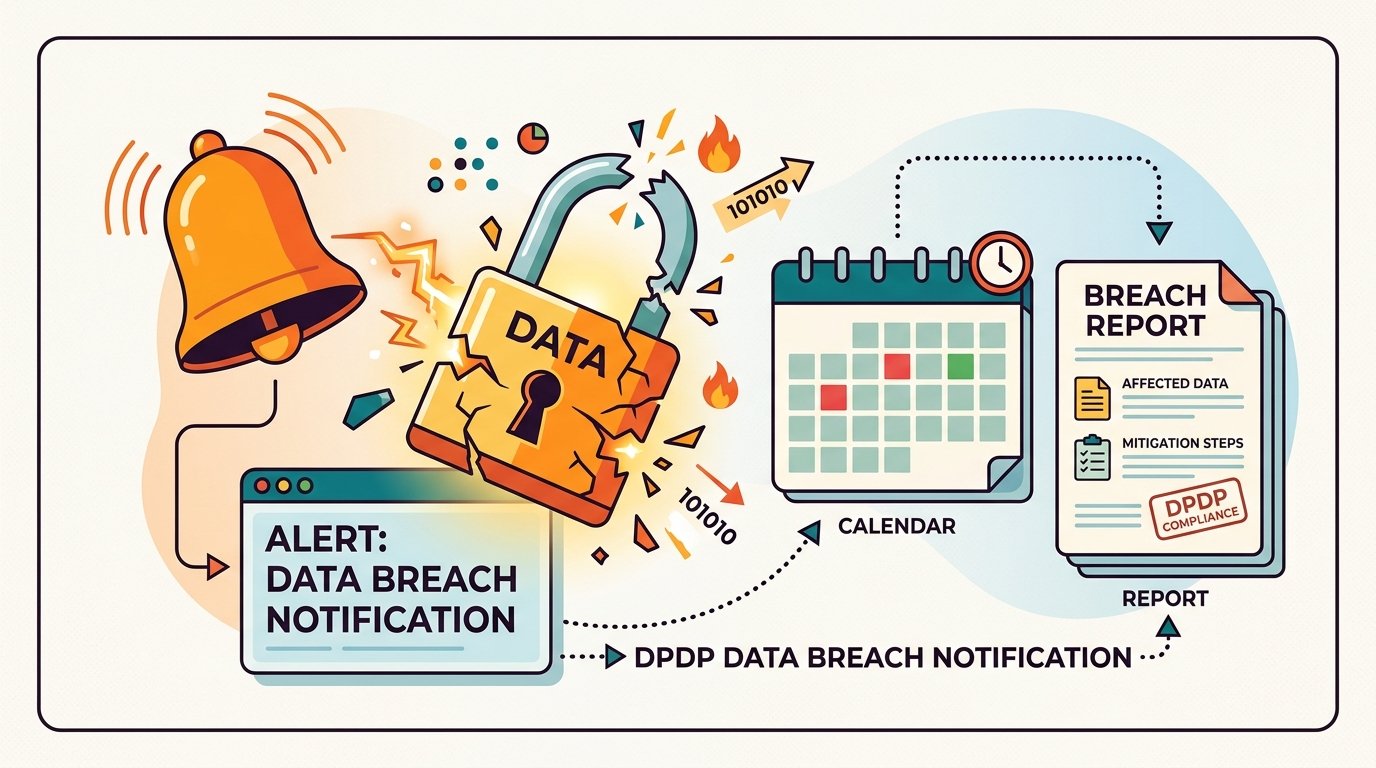
The DPDP Act removes this discretion. If a personal data breach occurs, you must notify the Data Protection Board of India (DPBI) and every affected Data Principal, regardless of the severity of the risk. A GDPR-compliant incident response plan will not trigger the necessary notifications required under Indian law.
4. Duties of the Data Principal
This is unique to India. The DPDP Act actually places legal duties on the users (Data Principals). Users are legally obligated not to register false grievances, not to furnish false particulars, and not to impersonate others. A DPDP-compliant privacy policy should include a section reminding users of their legal duties—something completely absent from GDPR templates.
Conclusion
GDPR compliance is a strong foundation, but it is not the finish line for India. Relying on European templates exposes organizations to massive regulatory risk. Companies must conduct a ground-up review of their data flows and draft policies specifically tailored to the unique vocabulary, strict consent rules, and uncompromising child protection mandates of the DPDP Act.