
Introduction
For startups, speed and growth are often the top priorities. However, with the enforcement of India’s Digital Personal Data Protection (DPDP) Act, 2023, “move fast and break things” can no longer apply to user data. The DPDP Act represents a paradigm shift in how businesses—regardless of their size—must collect, store, and process personal data.
Unlike established enterprises with dedicated legal and compliance teams, startups often operate with lean resources. The prospect of facing penalties up to ₹250 Crores can be daunting. But compliance doesn't have to be a roadblock to innovation. By adopting a proactive, privacy-by-design approach, startups can turn compliance into a competitive advantage, building trust with early adopters and investors alike.
Here is a practical, step-by-step roadmap to help your startup prepare for the DPDP Act without breaking the bank.
Step 1: Map Your Data Landscape
You cannot protect what you do not know you have. The first step is to conduct a comprehensive data mapping exercise.
- Identify Data Sources: Where is data coming from? (e.g., website forms, app registrations, third-party APIs, physical registers).
- Categorize the Data: What exactly are you collecting? Names, phone numbers, email addresses, financial details, or behavioral data?
- Track the Flow: Where does the data go once collected? Is it stored in AWS, processed by a SaaS analytics tool, or shared with marketing partners?
Startup Tip: Create a simple spreadsheet listing every data point, its source, storage location, and the third-party vendors who have access to it.
Step 2: Implement "Notice and Consent" Mechanisms
Under the DPDP Act, you must provide a clear, plain-language notice to users before or at the time of collecting their personal data, followed by obtaining their explicit consent.
- Draft a Clear Privacy Notice: The notice must explicitly state what data is being collected and the purpose of processing. Avoid dense legalese. Crucially, the DPDP Act requires this notice to be available in English and all 22 languages specified in the Eighth Schedule of the Constitution.
- Obtain Verifiable Consent: Consent must be free, specific, informed, unconditional, and unambiguous. Pre-ticked boxes are no longer acceptable.
- Enable Withdrawal: It must be as easy for a user to withdraw their consent as it was to give it. Build a "Consent Settings" dashboard into your app or website.
Step 3: Embrace Data Minimization
The days of collecting data "just in case" are over. The DPDP Act enforces the principle of data minimization—you should only collect the data absolutely necessary for the specified purpose.
If you are a food delivery startup, you need the user's location and phone number. You do not need access to their photo gallery or contacts. Review your current data collection practices and aggressively prune unnecessary fields. This not only aids compliance but also reduces your attack surface in the event of a breach.
Step 4: Secure the Data (Reasonable Security Safeguards)
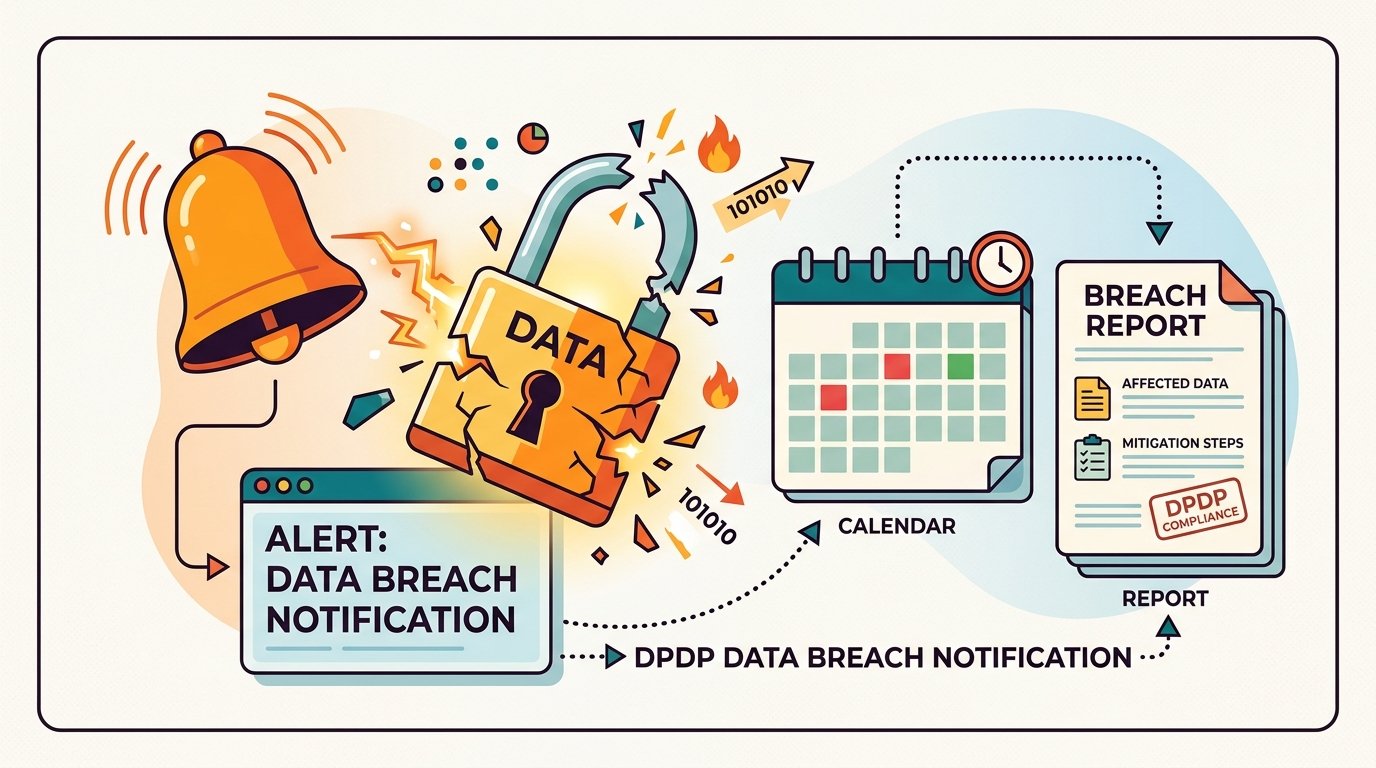
The highest penalty under the DPDP Act (₹250 Crores) is reserved for failing to take reasonable security safeguards to prevent a personal data breach.
Startups don't need enterprise-grade security operations centers on day one, but they must implement foundational security:
- Encryption: Encrypt personal data at rest (in your databases) and in transit (using HTTPS/TLS).
- Access Control: Implement Principle of Least Privilege (PoLP). Only employees who need access to personal data to do their jobs should have it. Use Role-Based Access Control (RBAC).
- Multi-Factor Authentication (MFA): Mandate MFA for all internal accounts, especially for developers and database administrators.
Step 5: Audit Your Vendors (Data Processors)
If your startup uses AWS for hosting, Stripe for payments, or Mailchimp for emails, you are using Data Processors. Under the DPDP Act, the Data Fiduciary (your startup) is ultimately responsible for the actions of its Data Processors.
- Review Contracts: Update your vendor contracts to include strict data processing clauses. Ensure they are obligated to protect the data and notify you immediately in case of a breach.
- Vendor Selection: Going forward, make DPDP (or GDPR) compliance a core criterion when selecting new SaaS tools or third-party services.
Step 6: Prepare for Data Principal Rights
The DPDP Act grants individuals (Data Principals) specific rights, including the right to access, correct, and erase their personal data.
Startups must establish an internal process—even if it's just a dedicated support email address initially (e.g., privacy@yourstartup.com)—to handle these requests within the legally mandated timeframes. As you scale, automate these processes within your product to reduce manual overhead.
Step 7: Appoint a Point of Contact
While only "Significant Data Fiduciaries" are required to appoint a dedicated Data Protection Officer (DPO) based in India, every Data Fiduciary must publish the contact details of a person authorized to answer queries and handle grievances from Data Principals.
Designate a founder, operations lead, or legal counsel as this point of contact and ensure their details are prominently displayed in your Privacy Notice.
Conclusion
DPDP Act compliance is not a one-time project; it is an ongoing operational standard. For startups, embedding privacy into the DNA of the company from the outset—often called Privacy by Design—is far cheaper and more effective than trying to retrofit compliance into a mature product later.
Start small, focus on transparency and security, and view data protection not as a regulatory burden, but as a commitment to your users' trust.