
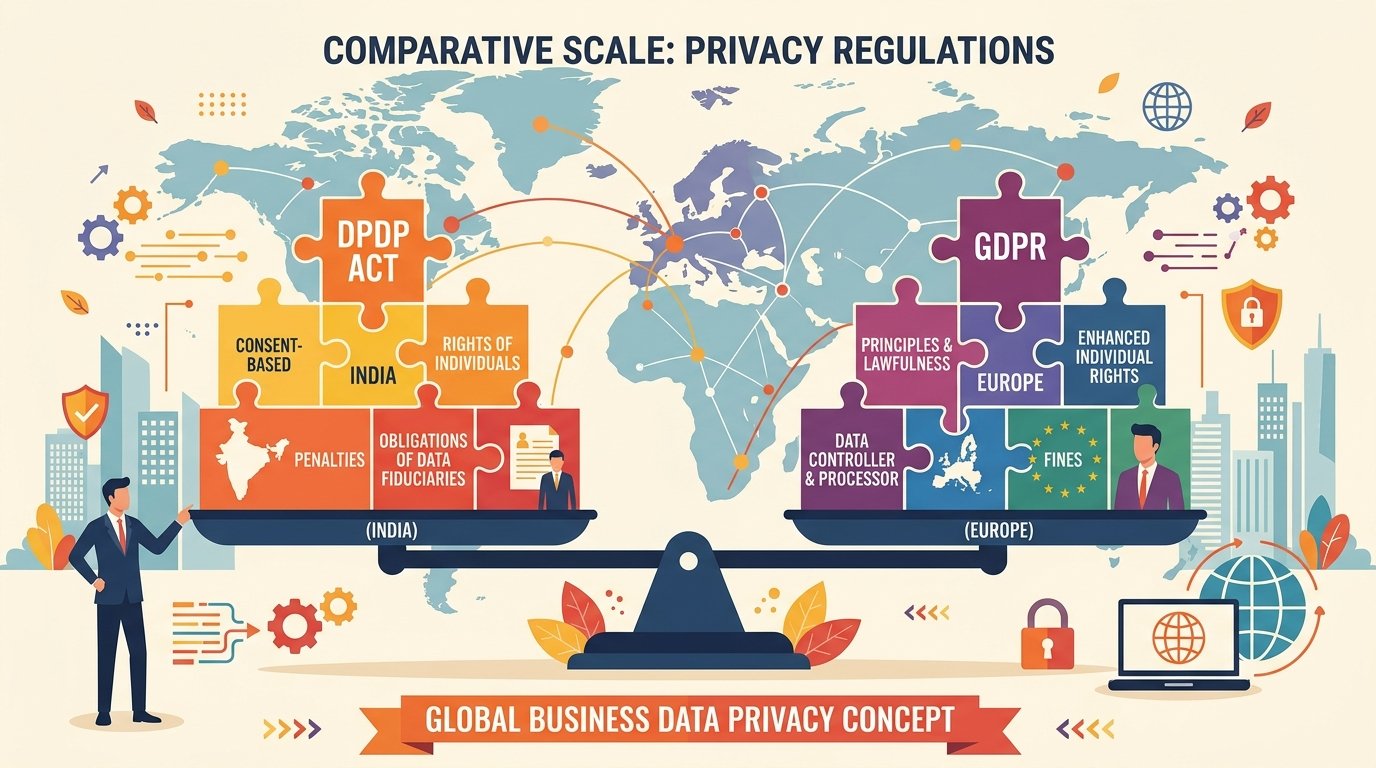
Introduction
For years leading up to the final passage of the Digital Personal Data Protection (DPDP) Act, 2023, the tech industry was gripped by fear over strict data localization. Early drafts of the bill suggested that all personal data, or at least "critical" personal data, would have to be physically stored on servers located within India's borders.
When the final Act was published, Silicon Valley breathed a collective sigh of relief. The DPDP Act adopted a remarkably liberal approach to cross-border data flows. But does this mean India has abandoned its quest for data control? Not exactly. While strict localization is mostly dead, the concept of Data Sovereignty is very much alive.
The "Negative List" Approach
Unlike the GDPR, which restricts data transfers to countries unless they have an "adequacy decision" from the EU (a "positive list"), the DPDP Act uses a "negative list" approach. Section 16(1) states that the Central Government may restrict the transfer of personal data by a Data Fiduciary to any specific country or territory outside India.
In plain English: You can transfer Indian citizens' data to any cloud server in the world, unless the Indian government explicitly blacklists that specific country. This is a massive win for startups using global SaaS tools like AWS (US-East), Salesforce, or global analytics engines.
Sectoral Laws Still Rule
Here is the crucial catch: The DPDP Act explicitly states that if another Indian law provides for a higher degree of protection or restriction on data transfers, that law supersedes the DPDP Act.
Therefore, if you are a Fintech company, the RBI's April 2018 mandate requiring payment system data to be stored exclusively in India still applies. If you are in the telecom or defense sectors, your specific regulatory licenses will still mandate localization. The DPDP Act's liberal rules only apply to general consumer data not governed by stricter sectoral watchdogs.
The Sovereignty Clause
The ghost of data control lives on in the DPDP Act's exemptions. The Central Government has retained sweeping powers to exempt any of its instrumentalities from the provisions of the Act "in the interests of sovereignty and integrity of India, security of the State, friendly relations with foreign States, [and] maintenance of public order."
Furthermore, under Section 36, the government can call for any information from the Data Protection Board or any Data Fiduciary. This ensures that while data might reside on a server in Virginia, the Indian government retains sovereign legal authority to demand access to that data during national security or criminal investigations.
Conclusion
The DPDP Act struck a pragmatic balance. By dropping strict localization, it allowed the Indian tech ecosystem to remain globally integrated and competitive, avoiding the massive infrastructure costs of forced domestic hosting. However, through sectoral carve-outs and strong sovereign exemptions, the Indian state ensured it retains ultimate authority over its citizens' digital footprints.