Introduction
No modern enterprise operates in a vacuum. Businesses rely on a vast ecosystem of third-party vendors—from cloud hosting giants like AWS and Azure to specialized SaaS providers for payroll, CRM, and marketing analytics. While this outsourcing drives efficiency, it creates a massive blind spot for data security.
Under India’s Digital Personal Data Protection (DPDP) Act, 2023, you can outsource the processing of data, but you cannot outsource the liability. If a vendor breaches your customer data, the regulatory hammer falls on you.
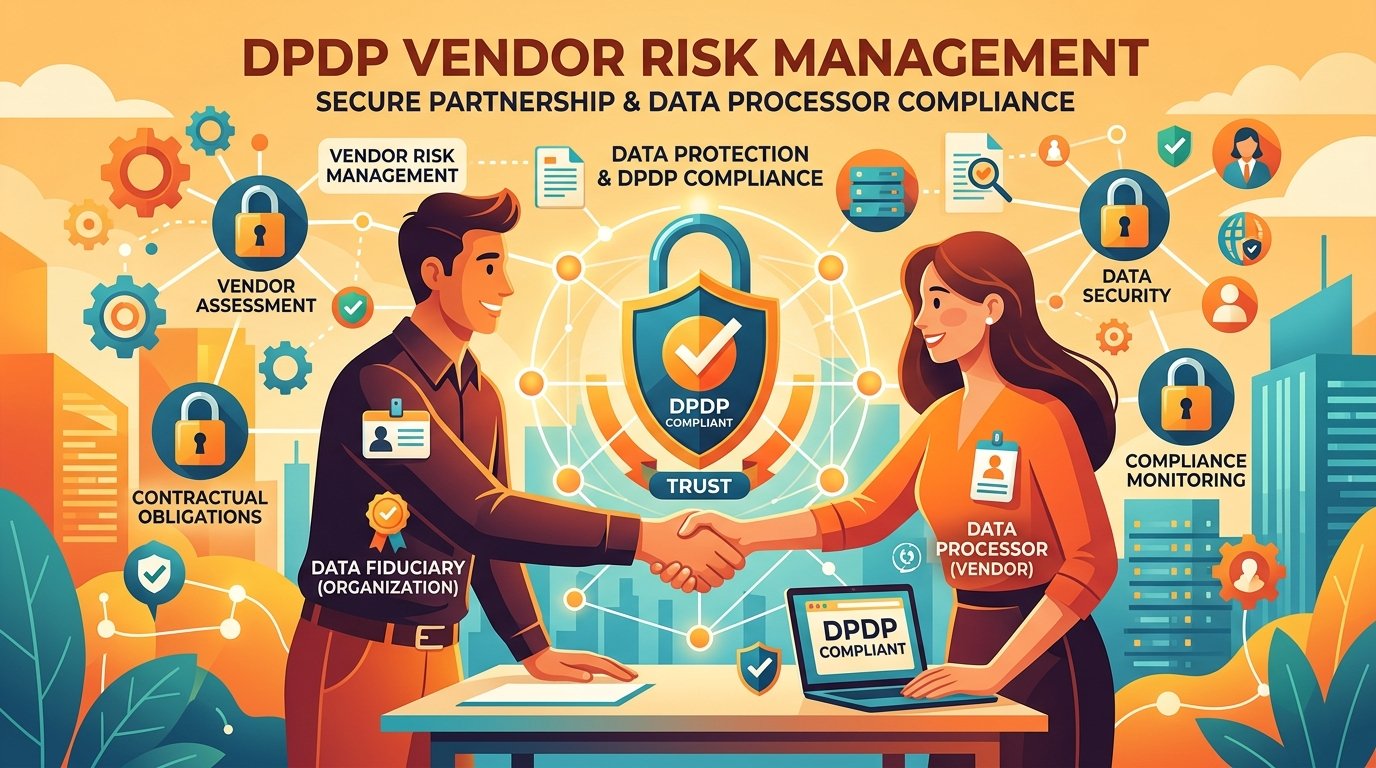
This article explores the critical relationship between Data Fiduciaries (enterprises) and Data Processors (vendors) under the DPDP Act and outlines how to build a resilient Vendor Risk Management (VRM) program.
Fiduciaries vs. Processors: The Liability Shift
The DPDP Act clearly distinguishes between two entities:
- Data Fiduciary: The entity determining the purpose and means of processing personal data. (e.g., An e-commerce company collecting customer addresses to ship products).
- Data Processor: Any person who processes personal data on behalf of a Data Fiduciary. (e.g., A third-party logistics company given those addresses to deliver the packages).
Crucially, Section 8(1) of the Act states that a Data Fiduciary is responsible for complying with the provisions of the Act in respect of any processing undertaken by it or on its behalf by a Data Processor. This means the enterprise is entirely on the hook for its vendors' security failures.
The Core Mandate: Valid Contracts
The DPDP Act permits a Data Fiduciary to engage a Data Processor only under a valid contract. Handshake agreements or generic terms of service are no longer sufficient. These Data Processing Agreements (DPAs) must be legally binding and heavily customized to address DPDP compliance.
A robust DPA under the DPDP Act should mandate the following from the vendor:
- Purpose Limitation: The vendor may only process data on the explicit, written instructions of the Fiduciary and for no other purpose.
- Security Standards: The vendor must implement "reasonable security safeguards" as required by the Act. Specify technical standards like SOC 2, ISO 27001, or specific encryption protocols.
- Sub-processing Restrictions: The vendor cannot hire another subcontractor (a sub-processor) to process the data without the prior written consent of the Fiduciary.
- Immediate Breach Notification: The vendor must notify the Fiduciary immediately (often within 24 hours) of any suspected or actual data breach, allowing the Fiduciary to meet its own reporting deadlines to the DPBI.
- Assistance with Rights: The vendor must assist the Fiduciary in fulfilling Data Principal rights (e.g., executing a deletion request on the vendor's servers).
- Return or Destruction: Upon termination of the contract, the vendor must securely return or destroy all personal data.
Building a Vendor Risk Management (VRM) Program
Contracts alone do not stop data breaches. Enterprises need a proactive VRM program to verify compliance continuously.
1. Vendor Discovery and Triage
Start by identifying every third party that touches your personal data. You cannot manage a risk you don't know exists. Once identified, triage them based on risk.
A vendor processing thousands of highly sensitive health records poses a "High Risk." A vendor managing a company's public social media calendar poses a "Low Risk." Focus your auditing resources on the high-risk tier.
2. Pre-Onboarding Due Diligence
Before signing a contract with a new vendor, conduct a privacy and security assessment. This usually involves sending a detailed questionnaire (like the standard SIG or CAIQ questionnaires) focusing on their access controls, data residency, encryption standards, and incident response history.
3. Continuous Auditing and Monitoring
Compliance is not a "set it and forget it" exercise. The DPDP Act requires continuous vigilance. For high-risk vendors, enterprises should mandate the right to audit the vendor's facilities or request annual third-party security certifications (like SOC 2 Type II reports).
The Cost of Getting It Wrong
If a vendor suffers a data breach due to poor security, the Data Protection Board of India will investigate the Data Fiduciary. If the DPBI finds that the Fiduciary failed to conduct due diligence or did not have a valid contract mandating reasonable security safeguards, the Fiduciary could face penalties up to ₹250 Crores.
Conclusion
In the DPDP Act era, a company's data privacy posture is only as strong as its weakest vendor. Enterprises must shift from viewing vendor management as a procurement task to treating it as a critical cybersecurity and legal function. By enforcing strict contracts and continuous audits, businesses can protect their data, their customers, and their bottom line.